

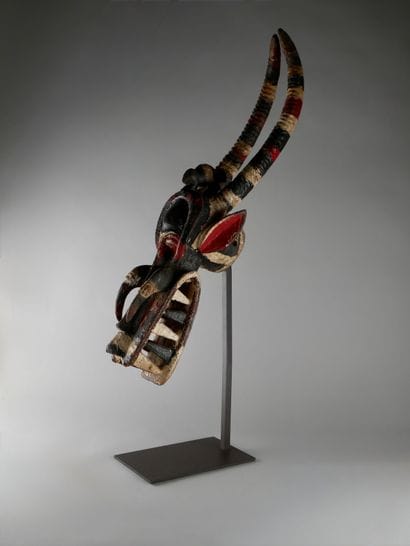
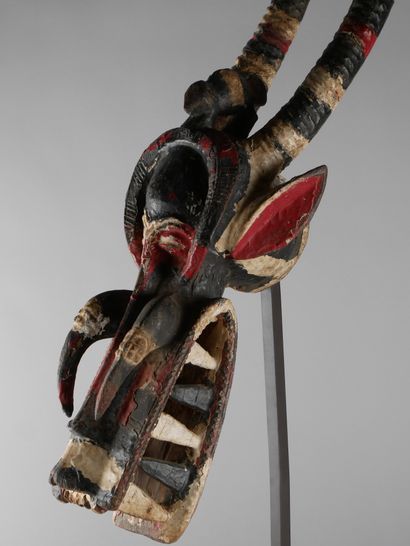
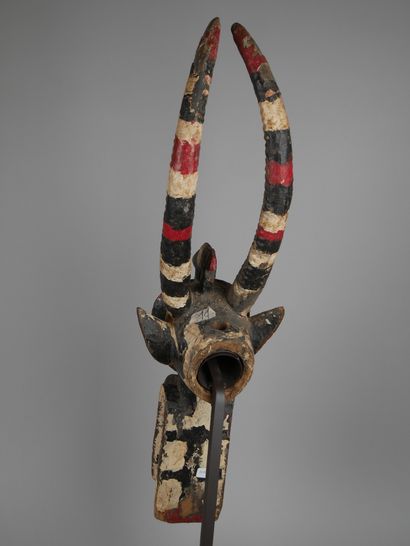
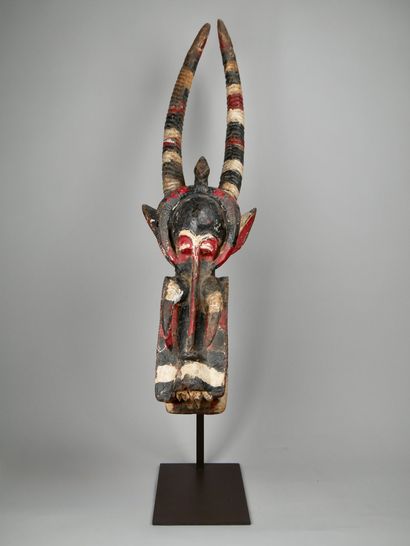
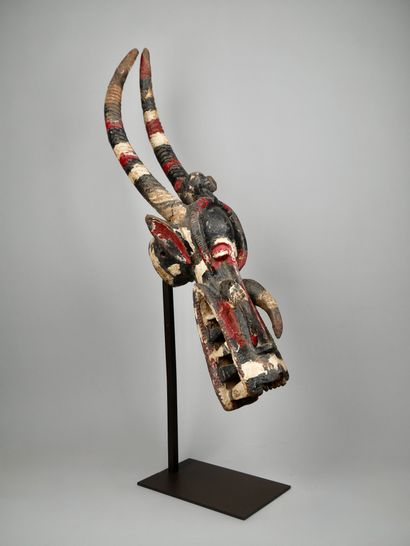
Sale information - Arts from Africa & Oceania
Arts from Africa & Oceania and miscellaneous
Closed sale April 8 at 2 pm
Sale broadcast on drouot live and invaluable.
A few places available by reservation only.
Exhibition
66 avenue Victor-Hugo, 75116
By appointment only
Tuesday April 7: 9:30-18:00
Wednesday April 8: 9:30-11:00
Information
Contact@baronreverdito.com
tel : 01 42 73 00 66
Consultant Art d'Afrique et d'Ccéanie
Mrs Anaelle Dechaud
Fees 30% incl. VAT in addition to platform fees.
1.8% Drouot
3% invaluable
Storage
10 days free by appointment (66 avenue Victor-Hugo, 75116)
1 euro per day thereafter.
Sales conditions - Arts from Africa & Oceania
CONDITIONS GÉNÉRALES D’ACHAT
BARON REVERDITO, société par action simplifiée inscrite au Registre du Commerce et des Sociétés de Paris sous le numéro SIREN 942 537 421 et dont le siège social est sis, 66, avenue Victor Hugo, 75116, Paris, est un opérateur de ventes volontaires de meubles aux enchères publiques régi par les articles L. 321-4 et suivants du Code de commerce.
En cette qualité, BARON REVERDITO agit comme mandataire du vendeur qui contracte avec l’adjudi- cataire par son intermédiaire. Les rapports entre BA- RON REVERDITO et l’enchérisseur sont soumis aux présentes conditions générales d’achat (ci-après, les «CGA »).
L’adjudication oblige l’adjudicataire au paiement comptant du prix d’adjudication majoré des frais et taxes afférents à la vente. Sous réserve des précisions des CGA, s’appliquent de manière cumulative,
les frais suivants, calculés sur le prix d’adjudication :
- des frais de vente à hauteur de 25 % HT (soit 30 % TTC*) entre 0 € et 500.000 € ;
Puis dégressivité comme suit : 20,83 % HT (soit 25% TTC*) entre 500.001 € à 1.500.000 € ; 16,66 % HT (soit 20% TTC*) sur la tranche supérieure à 1.500.001 €.
L’assiette et le taux de TVA applicable étant fonction de critères précisés à l’Article 3 « TVA » des
présentes CGA.
- des frais d’utilisation de plateformes tierces :
• 1,5% HT en sus (soit 1,8% TTC*) pour les Lots acquis sur la Plateforme Digitale Live « https://drouot. com » (v. CGV de la plateforme « https://drouot.com »)
+ 0.45% HT (soit 0,54 % TTC*) de prestation cyber-clerc ;
• 3% HT en sus (soit 3,6% TTC*) pour les Lots acquis
via la Plateforme Digitale Live « https://invaluable.com » (v. CGV de la plateforme « https://invaluable.com ») + 0.45% HT (soit 0,54 % TTC*) de prestation cyber-clerc ;
• Pour les ventes complètement dématérialisées,
Exclusivement en Ligne, réalisées via la plateforme
«drouotonline.com », les frais de vente à la charge
de l’acheteur sont majorés de 3% HT du prix d’adjudication (cf. CGV de la plateforme Drouotonline. com).
- des frais de stockage et/ou de dépôt et d’assurance en garde-meuble auprès de sociétés tierces
L’adjudicataire s’oblige au paiement du montant to- tal de son bordereau selon les modalités figurant au sein des CGA.
Les lots sont vendus par un vendeur à l’adjudicataire, BARON REVERDITO n’étant pas partie au contrat de vente.
BARON REVERDITO n’effectue aucun emballage ni envoi.
PRÉAMBULE – ACCEPTATION, OPPOSABILITÉ ET MODIFICATION DES CGA
Les CGA sont applicables sans restriction ni réserve à la relation entre BARON REVERDITO et tout enchérisseur. Les CGA sont communiquées préalablement à la vente sur le site Internet de BARON REVERDITO. L’enchérisseur déclare avoir pris connaissance des CGA et les accepte sans réserve en portant une enchère, quel qu’en soit le moyen.
Les CGA applicables à la relation entre les par- ties sont celles en vigueur au moment de la vente concernée en tenant compte des éventuelles modifications écrites ou orales émises avant et pendant la vente et qui sont reportées au sein du procès-verbal de vente.
PARTIE 1 – AVANT LA VENTE
1. Indications relatives aux lots
Les notices d’information contenues dans le catalogue sont établies, en l’état des connaissances au jour de la vente et avec toutes les diligences requises, par BARON REVERDITO et l’expert qui l’assiste le cas échéant, sous réserve des notifications, déclarations, rectifications, annoncées verbalement au moment de la présentation du lot et reportées au procès-verbal de vente. BARON REVERDITO recommande à tout éventuel enchérisseur de procéder à un examen des lots préalablement à une éventuelle acquisition afin de se former un avis sur le lot.
1.1 État des lots et constats d’état ou de conservation
Les lots sont vendus dans l’état dans lequel ils se trouvent au moment de la vente et il relève ainsi de la responsabilité des futurs enchérisseurs d’examiner chaque lot avant la vente et notamment lors des expositions. Seule l’existence de réparations, ainsi que de restaurations, manques et ajouts significatifs dont le lot peut avoir fait l’objet, a vocation à être indiquée. Pour autant, l’absence de mention dans le catalogue n’implique aucunement que le lot soit en parfait état de conservation ou exempt de dommages, accidents, incidents ou restaurations.
De même, la mention de défectuosités n’implique pas l’absence d’autres défauts. Des constats d’état ou de conservation des objets peuvent être établis gracieusement sur demande et par commodité pour tout lot dont l’estimation basse est supérieure à une valeur de mille (1000) euros.
De tels constats ne constituent pas une garantie quant à l’état des lots, à leurs dimensions ou à leur poids.
1.2 Œuvres d’art et objets de collection
BARON REVERDITO rappelle que l’emploi du terme
«attribué à » suivi d’un nom d’artiste garantit que l’oeuvre ou l’objet a été exécuté pendant la période de production de l’artiste mentionné et que des présomptions sérieuses désignent celui-ci comme l’auteur vraisemblable.
« Entourage de » signifie que l’oeuvre ou l’objet est le travail d’un artiste contem- porain de l’artiste mentionné qui s’est montré très influencé par l’oeuvre du maître. L’emploi des termes « atelier de » suivis d’un nom d’artiste ga- rantit que l’oeuvre a été exécutée dans l’atelier du maître cité mais réalisée par des élèves sous sa direction. Les expressions « dans le goût de », « style », « manière de », « genre de », « d’après », « façon de » ne confèrent aucune garantie particulière d’identité d’artiste, de date de l’oeuvre ou d’école. Les biens d’occasion ne bénéficient pas de la garantie légale de conformité visée à l’article L. 217-2 du Code de la consommation.
1.3 Provenance
BARON REVERDITO rappelle que les mentions concernant la provenance d’un lot sont fournies sur indication du vendeur et ne sauraient entraîner la responsabilité de BARON REVERDITO. Si le vendeur a requis la confidentialité ou si l’identité des précédents propriétaires est inconnue du fait de l’ancienneté du lot, aucune indication relative à la provenance n’est portée au sein de la présentation du lot au catalogue.
1.4 Modifications des informations
Les informations figurant au catalogue peuvent faire l’objet de modifications ou de rectifications jusqu’au moment de la vente. Ces changements sont portés à la connaissance du public par un affichage en salle lors de l’exposition lorsqu’une telle modalité est proportionnée à la modification ou à la rectification et par une annonce faite par le commissaire-priseur habilité au moment de la vente. Ces modifications sont consignées au procès-verbal de vente.
1.5 Lot suivi d’un °
Les lots suivis d’un ° sont vendus par BARON REVERDITO ou par un membre de BARON REVERDITO, par l’expert de la vente sollicité par BARON REVERDITO ou par tout partenaire de BARON REVERDITO.
1.6 Illustration des lots
Les photographies des lots mis en vente figurant au catalogue et sur le site Internet de BARON REVER-
DITO, ainsi que sur les plateformes des opérateurs intermédiaires de BARON REVERDITO ont valeur de description du lot, incluant les défauts visibles sur les photographies. Les photographies sont néanmoins données à titre indicatif et notamment concernant les couleurs des oeuvres ou des objets reproduits dans le catalogue qui sont susceptibles de différer des couleurs réelles ou de comporter des différences résultant de manière non exhaustive, de l’adaptation technique, de la qualité photographique ou encore du support de reproduction.
1.7 Articles d’horlogerie et montres
Les articles d’horlogerie et les montres peuvent comporter des pièces qui ne sont pas d’origine. Les restaurations, caractéristiques techniques, numéros de série, dimensions et poids sont donnés à titre indicatif. BARON REVERDITO n’apporte aucune garantie que cet objet est en état de fonctionne-
ment. Il appartient à tout enchérisseur de procéder lui-même à l’analyse du fonctionnement et/ou d’une éventuelle restauration et/ou de l’étanchéité de tels objets. Les frais relatifs aux restaurations, révisions, aux réglages et à l’étanchéité sont à la charge exclusive de l’adjudicataire.
1.8 Pierres et bijoux
Les pierres et bijoux présentés à la vente peuvent avoir fait l’objet de traitements destinés uniquement à les mettre en valeur (notamment, et de manière non limitative : huilage des émeraudes, traitement thermique des rubis et saphirs, blanchissement des perles, etc.), n’altérant en rien leur qualité. Les pierres présentées sans certificat de laboratoire sont vendues sans aucune garantie d’un éventuel traitement. Lorsqu’il est indiqué qu’une pierre ou qu’un bijou est accompagné d’un certificat, les enchérisseurs sont invités à solliciter BARON REVERDITO afin que leur soit communiqué ce document, lequel fait foi sur tout autre document contradictoire. Il est précisé que l’origine des pierres et la qualité (comprenant notamment, et de manière non limitative, la couleur et la pureté) reflètent l’opinion du laboratoire qui émet le certificat.
2. Estimations des lots
BARON REVERDITO rappelle que les estimations sont fondées sur l’état, la rareté, la qualité et la provenance des lots et sur les prix récemment atteints aux enchères pour des biens similaires.
Les estimations peuvent changer. Les estimations sont ainsi fournies à titre purement indicatif et elles ne peuvent être considérées comme impliquant la certitude que le lot soit vendu au prix estimé ou à l’intérieur de la fourchette d’estimations. Les estimations ne sauraient ainsi constituer une quelconque garantie. Les estimations ne comprennent ni les frais de vente ni aucune taxe ou frais applicables. Les estimations sont données dans la devise de la vente.
3. Retrait de tout lot
BARON REVERDITO peut librement retirer un lot à tout moment avant la vente ou pendant la vente aux enchères. Cette décision de retrait n’engage en aucun cas la responsabilité de BARON REVERDITO à l’égard de tout enchérisseur.
4. Exposition publique préalable à la vente
BARON REVERDITO est libre d’organiser des expositions publiques préalablement à la vente et dont les modalités sont précisées sur le catalogue ou surtout support de la vente concernée. Pour les ventes onlines, les lots sont visibles sur rendez-vous et la présentation des lots sur le catalogue online vaut publicité. Tout enchérisseur est invité à examiner les lots préalablement à la vente. Les lots y sont exposés dans des conditions assurant leur protection contre d’éventuels dommages. Toute manipulation non supervisée de BARON REVERDITO et effectuée par un tiers se fait à ses risques et périls.
PARTIE 2 – LA VENTE
1. Enregistrement et accès à la vente
En vue d’une bonne organisation de la vente et préalablement à celle-ci, les enchérisseurs sont invités à se faire connaître auprès de BARON REVERDITO, en lui communiquant un justificatif d’identité, ainsi que des références bancaires.
BARON REVERDITO se réserve le droit de solliciter une consignation dont le montant est libéré dans les soixante-douze (72) heures après la vente si le lot n’a pas été adjugé à l’enchérisseur. BARON REVERDITO se réserve le droit d’interdire l’accès à la vente à tout enchérisseur pour justes motifs, notamment et de manière non limitative, en raison de l’inscription de l’enchérisseur au fichier TEMIS ou au Registre central de prévention des impayés des commissaires-priseurs, de refus de consignation du dépôt de garantie ou encore de refus de communication de documents d’identification, des références bancaires sollicités par BARON REVERDITO et distincte du règlement précédent ou d’incidents préalables avec cet enchérisseur.
L’enchérisseur est réputé s’inscrire et enchérir pour son propre compte. S’il enchérit pour autrui, l’enchérisseur doit indiquer à BARON REVERDITO qu’il est dûment mandaté par un tiers pour lequel il communique une pièce d’identité et les références bancaires ainsi que le mandat pour agir en son nom.
Toute fausse indication engage la responsabilité de l’enchérisseur. Si l’enchérisseur agit en tant qu’agent pour un mandant occulte il accepte expressément d’être tenu personnellement responsable de payer le prix d’achat et toutes autres sommes dues.
BARON REVERDITO étant soumise aux obligations en matière de lutte contre le blanchiment de capitaux et le financement du terrorisme, elle se réserve le droit de demander à tout enchérisseur de justifier de son identité au moyen d’un document probant et ce, conformément aux dispositions du Code monétaire et financier. À défaut de communiquer de tels
documents ou si la vérification de ces documents s’avère impossible, l’enchérisseur ne peut s’inscrire à la vente.
2. Modalités des enchères
2.1. Enchères en salle
BARON REVERDITO rappelle que le mode usuel pour enchérir consiste à être présent en salle pendant la vente, à moins que la vente ne soit réalisée de manière totalement dématérialisée (vente online). BARON REVERDITO ne peut engager sa responsabilité pour tout autre mode de passation des enchères, notamment si une erreur qu’elle soit d’ordre technique ou non, une omission ou une difficulté de liaison ou de connexion existait.
2.2 Ordres d’achat fermes et enchères téléphoniques
BARON REVERDITO se propose d’exécuter gracieusement (i) des ordres d’achat fermes et (ii) des enchères téléphoniques, selon les instructions de l’enchérisseur. L’enchérisseur adresse sa demande à BARON REVERDITO en adressant une correspondance électronique à l’adresse contact@ba-onreverdito.com accompagné (i) d’un document d’identification (document officiel d’identité pour les personnes physiques, extrait Kbis pour les per- sonnes morales ainsi qu’un document officiel d’identité du représentant légal) et (ii) de coordonnées postales, électroniques et téléphoniques et ce, au plus tard vingt-quatre (24) heures avant la vente.
BARON REVERDITO peut subordonner l’acceptation d’une telle demande à la communication d’informations laissées à la discrétion de BARON REVERDITO. Toute demande d’ordre d’achat ferme ou d’enchères téléphoniques doit avoir reçu une confirmation de BARON REVERDITO pour être exécutée.
BARON REVERDITO se réserve le droit de ne pas accepter un ordre d’achat notamment, et de manière non limitative, si l’enchérisseur ne propose pas de garanties suffisantes. BARON REVERDITO n’accepte pas les enchères téléphoniques pour les lots dont l’estimation basse est inférieure ou égale à 500 euros. Tout enchérisseur enchérissant par téléphone s’engage à formuler une enchère d’un montant correspondant au minimum à l’estimation basse. Les offres illimitées ou d’ « achat à tout prix » ne sont pas acceptées, l’enchérisseur est tenu de donner un montant maximal. Dans le cas de plusieurs ordres d’achat identiques, la priorité est donnée à celui reçu en premier. Dans le cas d’enchères d’un même montant portées en salle, par enchères électroniques et par ordres d’achat fermes ou d’enchères téléphoniques, la priorité est donnée à l’enchère en salle. BARON REVERDITO décline toute responsabilité en cas d’erreurs éventuelles, d’oublis, d’insuccès si la liaison téléphonique ne peut être établie ou de non réponse suite à une tentative d’appel. BARON REVERDITO peut enregistrer les communications et peut les conserver jusqu’au règlement des
éventuelles acquisitions.
2.3. Enchères en ligne par des plateformes tierces
BARON REVERDITO peut proposer d’enchérir en ligne par le biais de tout site Internet de plateformes d’opérateurs intermédiaires relayant la vente. Ces
sites Internet constituent des plateformes tech niques permettant de participer à distance par voie électronique aux ventes aux enchères publiques ayant lieu dans des salles de ventes. L’utilisateur souhaitant participer à une vente aux enchères en ligne via ces sites Internet doit prendre connaissance et accepter, sans réserve, les conditions d’utilisation de ces plateformes, qui sont indépendantes et s’ajoutent aux présentes conditions générales d’achat, impliquant notamment des frais additionnels liés à leur utilisation. Par ailleurs, les éléments d’informations transmis par l’enchérisseur à la plateforme tierce sont transmis à BARON REVERDITO, laquelle se réserve la faculté de solliciter d’autres documents ou informations auprès de l’enchérisseur. BARON REVERDITO ne saurait être tenue responsable des éventuels dysfonctionnements de la plateforme tierce utilisée par l’enchérisseur.
2.4 Vente online
BARON REVERDITO organise des ventes online par le biais de plateformes d’opérateurs intermédiaires.
L’utilisateur souhaitant participer à une vente aux enchères en ligne via ces sites Internet doit prendre connaissance et accepter, sans réserve, les conditions d’utilisation de ces plateformes, qui sont indépendantes et s’ajoutent aux présentes conditions générales d’achat, et notamment vérifier l’application de tout frais éventuel pour l’utilisation de ces sites Internet tiers.
PARTIE 3 – DÉROULEMENT DE LA VENTE
1. Pouvoir discrétionnaire du commissaire-priseur habilité
Le commissaire-priseur habilité organise et dirige les enchères de façon discrétionnaire, la conduite de la vente suit l’ordre de la numérotation du catalogue et les paliers d’enchères sont à sa libre appréciation, celui-ci pouvant refuser des enchères en raison de paliers qu’il juge insuffisants. Le commissaire-priseur habilité veille au respect de la liberté des enchères et à l’égalité entre les enchérisseurs. Il dispose de la faculté discrétionnaire de refuser toute enchère, de retirer un lot de la vente et de désigner l’adjudicataire, c’est-à dire le plus offrant et le dernier enchérisseur, une fois le terme « adjugé » prononcé. Les enchères en salle priment sur toute autre enchère.
Le commissaire-priseur dispose de la faculté discrétionnaire de déplacer, de réunir ou de séparer des lots ou de retirer des lots de la vente. En aucun cas la responsabilité de BARON REVERDITO ne peut être engagée en cas de retrait de tout lot au cours de la vente, et notamment vis-à-vis des enchérisseurs ayant effectué une demande d’ordre d’achat ferme ou d’enchère téléphonique.
En cas de contestation au moment de l’adjudication, c’est-à-dire s’il est établi que deux ou plusieurs enchérisseurs ont simultanément porté une enchère équivalente, soit à haute voix, soit par signe, et réclament en même temps cet objet après le prononcé du mot « adjugé », ledit objet est immédiatement remis en vente au dernier prix proposé par les enchérisseurs et tout le public présent est admis à enchérir à nouveau. L’accès aux lots au cours de la vente est strictement interdit.
2. Conduite de la vente
La vente se fait expressément au comptant et est conduite en euros. BARON REVERDITO peut toutefois offrir, à titre indicatif, la retranscription des enchères en devises étrangères. En cas d’erreur de conversion de devises, la responsabilité de BARON REVERDITO ne peut être engagée, seul le prix en euros faisant foi.
3. Prix de réserve
Le prix de réserve s’entend du prix minimum confidentiel au-dessous duquel le lot ne sera pas vendu.
Ce prix ne peut dépasser l’estimation basse figurant au catalogue ou modifiée publiquement avant la vente et le commissaire-priseur habilité est libre de débuter les enchères en dessous de ce prix et de porter des enchères pour le compte du vendeur.
En revanche, le vendeur ne peut porter aucune enchère pour son propre compte ou par le biais d’un autre mandataire.
4. Préemption
Les articles L. 123-1 et L. 123-2 du Code du patrimoine autorisent, dans certains cas, l’État ou à la BNF à exercer un droit de préemption, c’est-à-dire à se substituer à l’adjudicataire, sur les oeuvres d’art mises en vente publique ou à l’occasion de ventes de gré à gré après une vente aux enchères publiques préalable infructueuse. Le représentant de l’État présent lors de la vacation formule sa déclaration auprès du commissaire-priseur habilité juste après la chute du marteau. La décision de préemption doit ensuite être confirmée dans un délai de quinze (15) jours. Par ailleurs, et conformément à l’article R. 123-7 du Code du patrimoine, le droit de
préemption peut être exercé par voie électronique.
En pareille situation, la décision de préemption doit être confirmée dans un délai de quatre (4) heures à compter de la réception du résultat par le représentant de l’État. En aucun cas, BARON REVERDITO ne peut assumer une quelconque responsabilité du fait des décisions administratives de préemption.
5. Vente de gré à gré « aftersale»
Le ou les lots non adjugés à l’issue de la vente aux enchères publiques peuvent faire l’objet d’une vente de gré à gré, dite vente aftersale, pour laquelle les présentes CGA trouvent pleinement à s’appliquer, donnant lieu à l’établissement d’un bordereau d’adjudication comportant les frais nécessairement dus au titre de la vente du ou des lots.
PARTIE 4 – EXÉCUTION DE LA VENTE
Dans l’hypothèse où l’adjudicataire ne se serait pas fait enregistrer avant la vente, il doit communiquer les renseignements nécessaires dès l’adjudication du lot prononcée.
Les résultats de la vente, à savoir l’indication du prix d’adjudication, sont publics, de telle sorte que la responsabilité de BARON REVERDITO ne saurait être engagée en cas de communication de ces résultats sur des plateformes commerciales ou tout autre support de communication.
1. Obligation de paiement
L’adjudication oblige l’adjudicataire au paiement intégral du prix d’adjudication, ainsi que de l’ensemble des frais et taxes précisés ci-après. Le paiement doit être effectué en intégralité immédiatement après la vente selon les modalités précisées à l’Article 3 de la présente Partie et ne peut en aucun cas être différé, quand bien même l’adjudicataire souhaite exporter le lot et est dans l’attente de l’obtention d’une licence d’exportation. Aucun délai de paiement n’est accordé par BARON REVERDITO. Aucun lot n’est remis à l’adjudicataire avant l’acquittement de l’intégralité des sommes dues.
2. Frais de vente
En sus du prix d’adjudication, c’est-à-dire du « prix marteau », l’adjudicataire doit acquitter les frais de ventes suivants : des frais de vente à hauteur de
25 % HT (soit 30 % TTC*) entre 0 € et 500.000 € ;
Puis dégressivité comme suit : 20,83 % HT (soit 25% TTC*) entre 500.001 € à 1.500.000 € ; 16,66 % HT (soit 20% TTC*) sur la tranche supérieure à 1.500.001 €.
L’assiette et le taux de TVA applicable étant fonction de critères précisés à l’Article 3 « TVA » des présentes CGA, l’assiette et le taux de TVA applicable étant fonction de critères précisé à l’Article 3 «TVA » des présentes CGA.
Lorsque l’adjudicataire a enchéri sur une plateforme tierce, BARON REVERDITO facture à l’adjudicataire les frais additionnels dus par l’adjudicataire à la plateforme pour l’utilisation de celle-ci, selon la plateforme utilisée :
• 1,5% HT en sus (soit 1,8% TTC*) pour les Lots
acquis sur la Plateforme Digitale Live « https://drouot.com » (v. CGV de la plateforme « https://drouot.com »)
+ 0.45% HT (soit 0,54 % TTC*) de prestation cyber-clerc ;
• 3% HT en sus (soit 3,6% TTC*) pour les Lots acquis via la Plateforme Digitale Live « » (v. CGV de la plateforme « www.
interencheres.com ») + 0.45% HT (soit 0,54 % TTC*)
de prestation cyber-clerc ;
• 3% HT en sus (soit 3,6% TTC*) pour les Lots acquis
via la Plateforme Digitale Live « https://invaluable.com » (v. CGV de la plateforme « https://invaluable.
com ») + 0.45% HT (soit 0,54 % TTC*) de prestation cyber-clerc ;
• Pour les ventes complètement dématérialisées,
Exclusivement en Ligne, réalisées via la plateforme « Drouotonline.com », les frais de vente à la charge de l’acheteur sont majorés de 3% HT du prix d’adjudication (cf. CGV de la plateforme Drouotonline.com).
En fonction de la nature des lots, les lots en provenance d’une zone en dehors de l’Union européenne, et dont la présentation est précédée par le symbole *, sont soumis à des frais additionnels pouvant être rétrocédés à l’adjudicataire sur présentation des documents douaniers d’exportation hors Union européenne dans un délai de trois mois. Ces frais sont
de 5.5% sur le prix de l’adjudication. Les lots dont la présentation est précédée par le symbole «**» sont soumis à des frais additionnels de 20% sur le prix de l’adjudication.
3. TVA
Par principe, la vente est effectuée sous le régime fiscal de la marge prévu à l’article 297A du Code général des impôts, de telle sorte qu’il ne peut être délivré aucun document faisant ressortir la TVA. La TVA applicable est de 20%, à l’exception des ventes de livres pour lesquelles le taux de TVA est de 5,5%.
Par exception à ce qui précède, et en fonction de conditions tenant à la nature du lot et (i) à la qualité
du vendeur ou (ii) à l’origine du lot, BARON REVERDITO peut être tenue d’appliquer un taux de TVA à hauteur de 5,5% sur le montant total de l’adjudication dudit lot (prix marteau et frais acheteur), dont la présentation est précédée par le symbole «+».
L’adjudicataire justifiant d’un numéro de TVA intracommunautaire et d’un document prouvant la livraison dans son État membre de l’Union européenne peut obtenir le remboursement de la TVA sur une assiette déterminée par les dispositions légales et sous réserve de satisfaire aux conditions de l’article 262 ter du Code général des impôts. Cette possibilité est également offerte aux résidents hors Union européenne sous réserve de satisfaire aux conditions et délais légaux et réglementaires. Le défaut de
remboursement de la TVA et/ou le dépassement du
délai pour solliciter un tel remboursement ne peut
engager la responsabilité de BARON REVERDITO.
4. Paiement
Conformément à la réglementation applicable, BA-
RON REVERDITO n’accepte aucun paiement en
espèces lorsque le montant du bordereau est su-
périeur à 1.000 euros pour les particuliers français
et pour les commerçants français ou étrangers et
15.000 euros frais et taxes compris pour les res-
sortissants étrangers non commerçants sur présen-
tation de leur pièce d’identité avec une adresse à
l’étranger.
Le paiement de l’intégralité des sommes dues par l’adjudicataire est réalisé selon les moyens suivants :
● en espèces lorsque le montant du bordereau est inférieur aux seuils susvisés ;
● par carte bancaire Visa ou Mastercard au sein des bureaux de BARON REVERDITO aux horaires d’ouverture ;
● par virement bancaire, les éventuels frais additionnels de transfert étant à la seule charge de l’adjudicataire sur le compte suivant :
BNP PARIBAS
IBAN : FR76 3000 4005 7400 0103 8411 073
RIB : 30004 00574 00010384110 73 - PARIS EYLAU (00574)
En tout état de cause, la délivrance des lots est subordonnée à l’encaissement de l’intégralité dessommes dues par l’adjudicataire, de telle sorte que la délivrance peut être différée au complet encaissement desdites sommes.
Le paiement doit être réalisé au seul nom de l’adjudicataire. BARON REVERDITO rappelle qu’aucun paiement ne peut être réalisé pour un tiers et qu’aucune modification de l’identité de l’adjudicataire ne peut intervenir postérieurement à la vente aux en chères publiques.
En cas d’enchères téléphoniques ou d’ordres d’achat fermes, la consignation imposée par l’Article 2.2 de la Partie 1 est acquise à BARON REVERDITO et s’impute sur le montant dû par l’adjudicataire.
5. Retard de paiement
En l’absence de complet paiement des sommes dues dans un délai de trente (30) jours suivant la transmission du bordereau à l’adjudicataire, BARON REVERDITO lui adresse une correspondance électronique de mise en demeure lui impartissant de procéder au complet paiement dans un délai de quinze (15) jours suivant envoi de celle-ci. À défaut de s’y conformer, les sommes dues par l’adjudicataire sont productives d’un intérêt correspondant à trois fois le taux d’intérêt légal. En sus des intérêts de retard, et après le délai de quinze (15) jours suite à l’envoi de la mise en demeure, l’adjudicataire est redevable d’une indemnité forfaitaire de quarante (40) euros au titre des frais de recouvrement.
Par ailleurs, l’adjudicataire est redevable de l’ensemble des frais et accessoires relatifs à la mise en oeuvre du recouvrement des sommes dues.
6. Défaut de paiement
Conformément à l’article L. 321-14 du Code de commerce, à défaut de paiement par l’adjudicataire, et après mise en demeure restée infructueuse adressée à l’adjudicataire par courrier électronique, le bien est remis en vente à la demande du vendeur sur réitération des enchères, pour laquelle il devra s’acquitter des frais de vente ainsi que de la différence entre l’adjudication litigieuse et la nouvelle adjudication, lorsque cette dernière est moindre.
Si le vendeur ne formule pas cette demande dans un délai de trois (3) mois à compter de l’adjudication, BARON REVERDITO si elle l’accepte a mandat d’agir en son nom et pour son compte et peut, selon son choix :
1. notifier à l’adjudicataire défaillant la résolution de plein droit de la vente, sans préjudice d’éventuels dommages-intérêts et facturer à l’adjudicataire défaillant les frais de vente ;
2. poursuivre l’exécution forcée de la vente et le paiement du prix d’adjudication et des frais de vente, pour son propre compte et/ou pour le compte du vendeur, montant auquel s’ajoutent quarante euros de frais de recouvrement par lot.
En tout état de cause, l’adjudicataire défaillant ne peut invoquer la résolution du contrat pour se soustraire aux obligations qui sont les siennes. Toute consignation versée par l’adjudicataire est conservée à titre d’indemnité par BARON REVERDITO.
BARON REVERDITO se réserve le droit d’exclure
des ventes futures tout adjudicataire ou représentant de tout adjudicataire qui a été défaillant ou qui n’a pas respecté les présentes conditions générales d’achat.
BARON REVERDITO se réserve le droit d’inscrire l’adjudicataire défaillant ou son représentant à la liste noire des mauvais payeurs de DROUOT SI, lui interdisant ainsi d’utiliser les services de la plateforme Drouot.com.
Par ailleurs, BARON REVERDITO se réserve le droit d’inscrire au fichier TEMIS l’adjudicataire défaillant ou son représentant, ayant pour conséquence de limiter la capacité d’enchérir de l’adjudicataire défaillant auprès des opérateurs de ventes volontaires adhérents et de lui interdire l’utilisation de la plateforme Interencheres.
Enfin, BARON REVERDITO déclare les incidents de paiement au Registre central de prévention des impayés des commissaires-priseurs administré par le
SYMEV.
7. Délivrance des lots
L’adjudication opère transfert de propriété du ou des lots au profit de l’adjudicataire. Tout lot ne peut être délivré à l’adjudicataire qu’après paiement intégral du prix, des frais et des taxes. Sous réserve de la présentation de l’autorisation de délivrance du service comptable de BARON REVERDITO attestant du complet paiement du prix et de ses accessoires, les lots peuvent être délivrés au cours ou à l’issue immédiate de la vacation en salle de vente aux enchères. Les lots doivent être retirés dans les vingt-et-un (21) jours suivant la vente et après leur règlement intégral.
L’adjudicataire est invité à prendre rendez-vous afin de procéder au retrait de son lot au sein des locaux de BARON REVERDITO aux heures d’ouverture.
L’adjudicataire est en charge de l’emballage du ou des lots.
L’emballage effectué par BARON REVERDITO sur demande exprès de l’adjudicataire est un service gracieux et exceptionnel de BARON REVERDITO, de telle sorte que sa responsabilité ne saurait être engagée en raison de l’emballage effectué.
Les lots non retirés à l’issue de la vacation considérée sont entreposés à l’étude BARON REVERDITO ou au sein d’un autre lieu non géré par BARON REVERDITO le choix étant laissé à la discrétion de BARON REVERDITO.
Hors conditions particulières, et à compter du 30e jour après la vente, tout lot acheté réglé ou non réglé restant au sein des locaux de BARON REVERDI-
TO, fait l’objet de la facturation suivante :
- un (1) euro HT par jour pour les très petits lots,
à savoir les livres, les oeuvres sur papier non encadrées dont la taille est inférieure au format A4 ;
- cinq (5) euros HT par jour pour les petits lots, à savoir les tableaux mesurant moins de 1,5 x 1,5 m, les
lots légers et de petit gabarit ;
- dix (10) euros HT par jour pour les moyens lots, à savoir les tableaux mesurant plus de 1,5 m, les lots lourds et de petit gabarit ;
- quinze (15) euros HT par jour pour les grands lots, à savoir les lots lourds et de grand gabarit ;
- vingt (20) euros par jour pour les lots volumineux, à savoir les lots imposants ou composés de plusieurs lots présentant ensemble un aspect volumineux,
- vingt (20) euros HT par jour pour les bijoux et articles d’horlogerie d’une valeur supérieure à 10.000 euros (prix marteau) ;
- dix (10) euros HT par jour pour les bijoux et articles d’horlogerie d’une valeur inférieure à 10.000 euros (prix marteau), la qualification des lots au sein de l’une de ces catégories est laissée à la discrétion de BARON REVERDITO.
Sans réponse de l’adjudicataire durant un (1) an à compter de la mise à disposition du lot, le lot est considéré comme abandonné et ce, conformément à la loi du 31 décembre 1903 modifiée par l’ordonnance no 2019-964 du 18 septembre 2019, pouvant entraîner à la vente judiciaire du lot. Pour tout lot adjugé, réglé ou non, demeurant stocké dans un autre lieu que tout lieu géré directement par BARON REVERDITO dont le choix est laissé de manière discrétionnaire à BARON REVERDITO, l’adjudicataire est seul redevable des frais de stockage
inhérents au stockage du ou des lots en application des conditions générales de ces sociétés de stockage tierces, faisant l’objet d’une facturation par une société de stockage et que le montant soit ou non avancé par BARON REVERDITO.
8. Transfert de propriété et des risques – transport des lots
Le transfert des risques sur les lots s’opère au moment de l’adjudication lorsque l’adjudicataire revêt la qualité de professionnel, de telle sorte que la responsabilité de BARON REVERDITO ne peut être reconnue en cas de perte ou de dommages causés sur le ou les lots. Le transfert des risques à l’adjudicataire consommateur ou non-professionnel s’opère lorsque celui-ci ou un tiers désigné par ses soins (et notamment, et de manière non exhaustive, un transporteur) prend physiquement possession des lots. Le transport des lots doit être effectué aux frais et sous l’entière responsabilité de l’adjudicataire. L’adjudicataire est lui-même chargé de faire assurer ses acquisitions. BARON REVERDITO décline toute responsabilité quant aux dommages que le lot pourrait encourir, et ceci dès l’adjudication prononcée. BARON REVERDITO ne peut assumer une quelconque responsabilité en l’absence de prise de disposition à cet effet. BARON REVERDITO n’effectue aucun emballage ni envoi. Toutes les formalités d’emballage et de transport restent à la charge exclusive de l’adjudicataire, quelle que soit sa qualité, celui-ci devant se rapprocher de toute société de transport de son choix. L’adjudicataire doit solliciter un rendez-vous au moins 24 heures à l’avance afin que BARON REVERDITO mette à disposition du transporteur le ou les lots. Les sociétés de transport n’étant pas les préposées de BARON REVERDITO, cette dernière ne peut être responsable de leurs actes ou omissions. L’adjudicataire ayant opté pour un envoi de ses achats par une société de transport adhère aux conditions générales de ce prestataire et écarte la possibilité d’engager la responsabilité de BARON REVERDITO en cas de préjudice subi dans le cadre de cette prestation de services.
A titre indicatif :
The Packagers https://https://thepackengers.com/fr
9. Éventuel droit de rétractation du client consommateur pour l’achat d’un lot appartenant à un vendeur professionnel dans le cadre de ventes entièrement dématérialisées
L’adjudicataire consommateur est informé qu’il dispose d’un droit de rétraction lorsque (i) le vendeu est un professionnel – entendu comme toute personne physique ou morale, publique ou privée, qui agit à des fins entrant dans le cadre de son activité commerciale, industrielle, artisanale, libérale ou agricole – et (ii) que la vente est entièrement dématérialisée, en ce qu’elle se tient sans que quiconque n’ait
la capacité d’assister à la vente en personne. Les lots
pouvant bénéficier d’un droit de rétractation éventuel sont identifiés par le symbole « # ». Lorsque ce droit s’applique, l’adjudicataire consommateur dispose d’un délai de quatorze (14) jours suivant le lendemain de livraison ou de la délivrance du lot pour exercer ce droit en adressant une telle demande par courrier électronique. L’adjudicataire exerçant ce droit restitue le ou les lots à BARON REVERDITO et supporte les coûts directs de renvoi du ou des lots à BARON REVERDITO.
PARTIE 5 – DISPOSITIONS DIVERSES
1. Biens culturels
L’exportation hors de FRANCE ou l’importation dans un autre pays d’un lot peut être affectée par les lois du pays vers lequel il est exporté ou importé.
L’exportation de tout lot hors de FRANCE ou l’importation dans un autre pays peut être soumise à l’obtention d’une ou plusieurs autorisation(s) d’exporter ou d’importer. Certaines lois peuvent interdire l’importation ou interdire la revente d’un lot dans le pays dans lequel il a été importé. L’exportation d’un lot revêtant la qualité de bien culturel, e dehors du territoire douanier français est subordonnée à l’obtention d’un certificat délivré par les services compétents du Ministère de la Culture, dans un délai maximum de quatre (4) mois à compter de la demande, sous réserve des exceptions figurant au sein du Code du patrimoine. Les services du Ministère de la Culture peuvent refuser la délivrance d’un tel certificat ou rejeter une telle demande lorsque le bien culturel considéré est notamment susceptible de présenter le caractère d’un trésor national. En tout état de cause, la responsabilité de BARON REVERDITO ne saurait être engagée en cas de retardou de refus de délivrance de certificat. La demande, la suspension ou le refus de délivrance de certificat est sans incidence aucune sur l’obligation de paiement à la charge de l’adjudicataire, lequel est redevable de ces sommes envers BARON REVERDITO et notamment au titre des frais engagés. Sous certaines conditions laissées à la discrétion de BARON REVERDITO, BARON REVERDITO peut effectuer les formalités de demande de certificat d’exportation pour le compte de l’adjudicataire et est susceptible de facturer l’ensemble des frais afférents
à l’adjudicataire. En cas de suspension, de rejet de la demande ou de refus de délivrance du certificat, BARON REVERDITO n’est pas redevable du remboursement de telles sommes à l’adjudicataire.
2. Réglementation Cites
La réglementation internationale du 3 mars 1973, dite Convention de Washington, a pour objet la protection de spécimens et d’espèces dits menacés
d’extinction. L’exportation ou l’importation de tout lot fait ou comportant une partie (quel qu’en soit le pourcentage) en ivoire, écailles de tortues, peau
de crocodile, corne de rhinocéros, os de baleine, certaines espèces de corail et en palissandre, etc. peut être restreinte ou interdite. Il appartient, sous sa seule responsabilité, à l’adjudicataire de prendre conseil et de vérifier la possibilité de se conformer aux dispositions légales ou règlementaires qui peuvent s’appliquer à l’exportation ou l’importation d’un lot, avant même d’enchérir. Des informations supplémentaires relatives à la réglementation applicable à certains lots peuvent être indiquées sur la fiche de présentation dudit lot. Dans certains cas, le lot concerné ne peut être transporté qu’assorti d’une confirmation par expert, aux frais de l’adjudicataire, de l’espèce et ou de l’âge du spécimen concerné. BARON REVERDITO peut, sur demande, assister l’adjudicataire dans l’obtention des autorisations et rapport d’expert requis.
Ces démarches sont conduites aux seuls frais de l’adjudicataire. Cependant, BARON REVERDITO ne peut garantir que les autorisations soient délivrées.
En cas de refus de permis ou de délai d’obtention de celui-ci, l’adjudicataire reste redevable de la totalité du prix d’achat du lot. Un tel refus ou délai ne saurait en aucun cas justifier le retard du paiement ou l’annulation de la vente.
3. Propriété intellectuelle
BARON REVERDITO est seule titulaire du droit de reproduction sur son catalogue et son contenu. Toute reproduction de celui-ci est interdite et constitue une contrefaçon à son préjudice. Toute
reproduction du catalogue de BARON REVERDITO peut également constituer une reproduction illicite d’une oeuvre exposant son auteur à des poursuites en contrefaçon par le titulaire des droits d’auteur sur l’oeuvre. La vente d’une oeuvre n’emporte pas au profit de son nouveau propriétaire le droit de reproduction et de représentation de l’oeuvre.
4. Données personnelles
L’enchérisseur est informé que BARON REVERDITO, en sa qualité de responsable de traitement, collecte et traite des données personnelles dans le cadre de l’exécution d’un contrat avec l’enchérisseur, ayant pour objet la gestion des ordres d’achat ferme ou téléphonique, ainsi que la gestion des enchères et des adjudications. L’enchérisseur dispose d’un droit d’accès, de suppression, de rectification, de limitation et d’opposition de traitement et d’un droit à la portabilité sur ses données personnelles. L’enchérisseur est invité à consulter la politique de protection des données personnelles de BARON
REVERDITO.
5. Lutte contre le blanchiment de capitaux et le financement du terrorisme
Conformément à l’article L. 561-2, 14o du Code monétaire et financier, les obligations relatives à la lutte contre le blanchiment de capitaux et le financement du terrorisme sont applicables à BARON
REVERDITO en sa qualité d’opérateur de ventes volontaires lorsque celle-ci procède à une transaction ou une série de transactions liées d’un montant égal ou supérieur à 10.000 euros. L’adjudicataire ou son mandant s’engage à fournir spontanément et de bonne foi l’ensemble des documents permettant l’établissement de leur identité. Il s’engage, à première demande de BARON REVERDITO, laquelle n’a pas à être motivée, de répondre aux interrogations formulées et de lui adresser l’ensemble des documents et justificatifs sollicités par ses soins, et notamment afin de justifier de la provenance des fonds. Le défaut de réponse à de telles sollicitations, lesquelles sont justifiées par l’application de la réglementation, est susceptible d’entraîner la suspension ou l’annulation de la vente. En fonction du risque identifié, BARON REVERDITO peut se trouver dans l’obligation de mettre un terme ou de suspendre l’opération envisagée.
6. Loi applicable et attribution de compétence juridictionnelle
Conformément aux dispositions de l’article L. 321-17 du Code de commerce, l’action en responsabilité à l’encontre d’un opérateur de ventes volontaires se prescrit par cinq ans à compter de la prisée ou de la vente aux enchères publiques. BARON REVERDITO rappelle à ses clients l’existence du Recueil des obligations déontologiques des opérateurs de ventes volontaires pris par arrêté ministériel du 30
mars 2022. Ce recueil est disponible sur le site du Conseil des maisons de vente. BARON REVERDITO informe également ses clients de la possibilité de recourir à une procédure extrajudiciaire de règlement des litiges en saisissant le commissaire du Gouvernement près le Conseil des maisons de vente, en ligne ou par courrier avec accusé de réception. Seule la loi française régit les présentes conditions générales d’achat.
TOUS LES LITIGES AUXQUELS LE PRESENT CONTRAT POURRAIT DONNER LIEU, ET A DEFAUT DE CONCILIATION PREALABLE, CONCERNANT TANT SA VALIDITE, SON INTERPRETATION, SON EXECUTION, SA
RESILIATION, LEURS CONSEQUENCES ET LEURS SUITES SONT SOUMIS EXCLUSIVEMENT AUX TRIBUNAUX COMPETENTS DE PARIS (FRANCE) DANS LES CONDITIONS DE DROIT COMMUN.
Liste des symboles
° : lot vendu par BARON REVERDITO, l’expert de la vente ou les prestataires de services participant à l’organisation de la vente.
+ : lot dont la vente est assujettie à la TVA à hauteur de 5,5%.
* : lot dont la vente est soumise à des frais additionnels pouvant être rétrocédés à l’adjudicataire sur présentation des documents douaniers d’exportation hors Union européenne dans un délai de trois mois.
** : lot dont la vente est soumise à des frais additionnels à hauteur de 20%